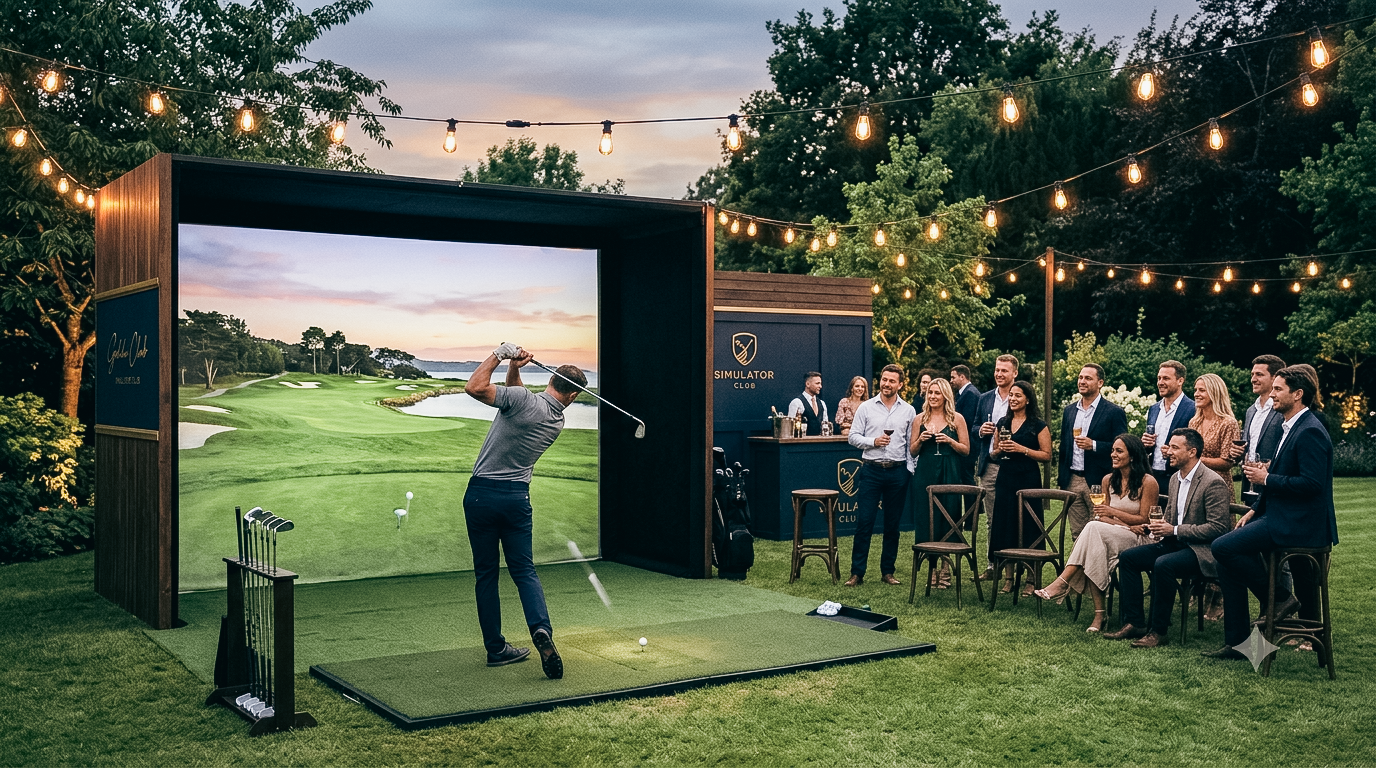
Before I get into why Fairway is starting mobile instead of opening a building on day one, it's worth backing up to who's actually writing this. My name is Russ Evans. I'm a Lead Solutions Engineer at Salesforce, and I've been a technologist for about as long as I can remember — starting with building my first computer with my dad. I've been a golfer for just as long, and the way I've always gotten better at anything, golf included, is with data.
That combination — golf and data — is where Fairway actually started, on a day that had nothing to do with either.
The day this started
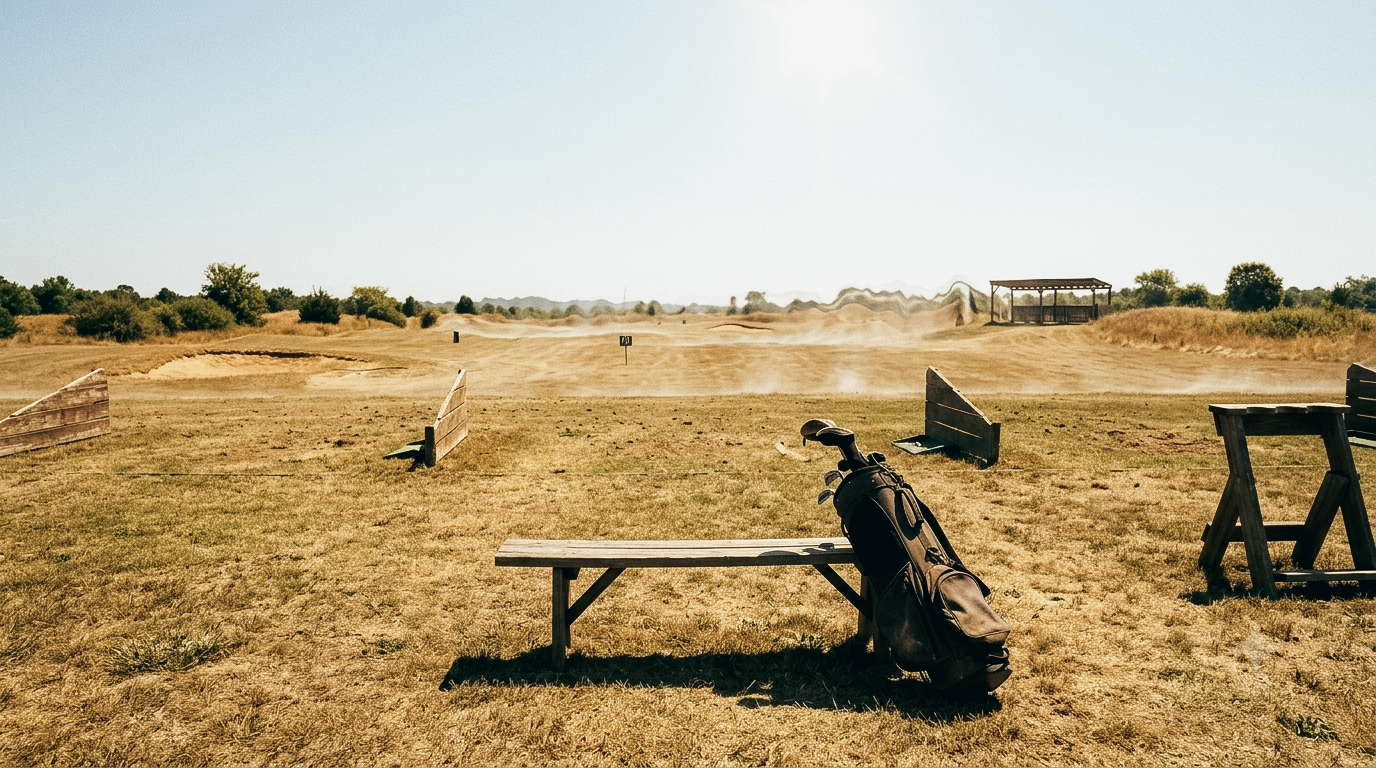
It was 105 degrees outside, and my friend Patrick and I wanted to hit some balls. The driving range near us wasn't happening — not in that heat, not for real practice. So Patrick looked around for an indoor option instead. The closest simulator with anything open was in Annandale, about thirty minutes from home.
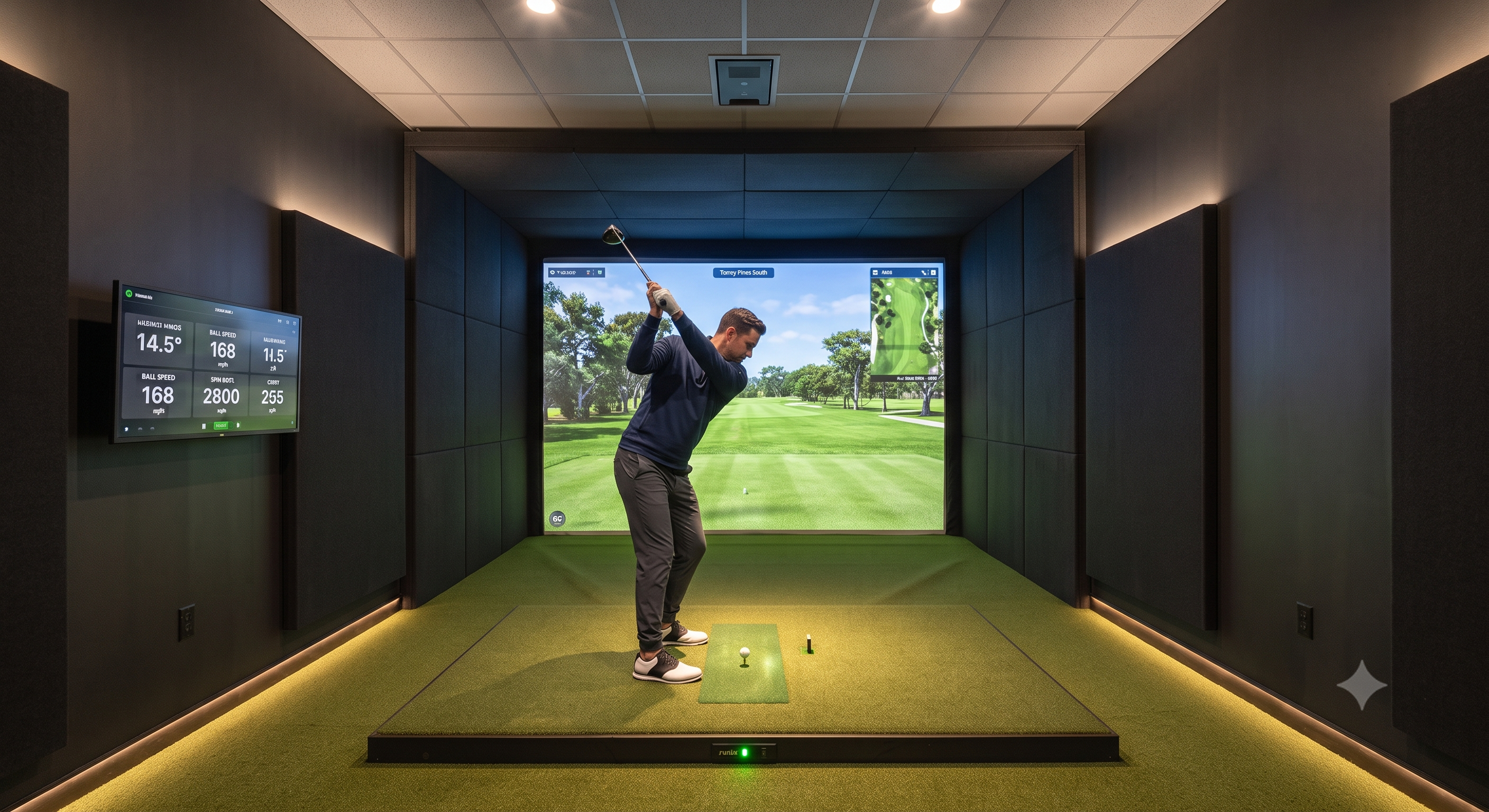
The technology itself was genuinely impressive — automatic tee-up, ball return, real course data up on the wall, exactly the kind of setup I'd read about. But the place around it didn't match the tech. It felt dark and a little uninviting, more like a rental unit than somewhere you'd want to spend an evening. We still had a great time — hitting balls, playing a few holes, putting and chipping with my buddy. The golf wasn't the problem. The place was.
On the drive home, that stuck with me. There's a handful of golf courses within fifteen minutes of where I live, in a community full of people who actually play — but nothing indoors that felt like it was built for them. That's the gap Fairway Sim Golf Club is trying to fill.
Why I think I can actually build this
Part of why I think I can pull this off comes from my day job. I spend my career working with data and Salesforce, and one thing I keep running into with golfers is that their data lives in pieces — one app tracks your scores, a different one reads your swing, and the two never talk to each other. Being able to build the technology side myself, instead of bolting together someone else's tools, is a real part of what makes this different from just renting out simulator time.
Why not just build the building first
My first instinct, honestly, was to go straight for a real location. I looked seriously at a historic property with a lot of character that would've made a great home for this, but there wasn't leasing space available when I went looking. That sent me back to the numbers, and the honest cost of doing a brick-and-mortar location right — even just a couple of bays — lands well into six figures. That's not out of reach forever, especially with a loan or the right investors involved. But betting everything on that before a single golfer had tried the idea didn't sit right with me.
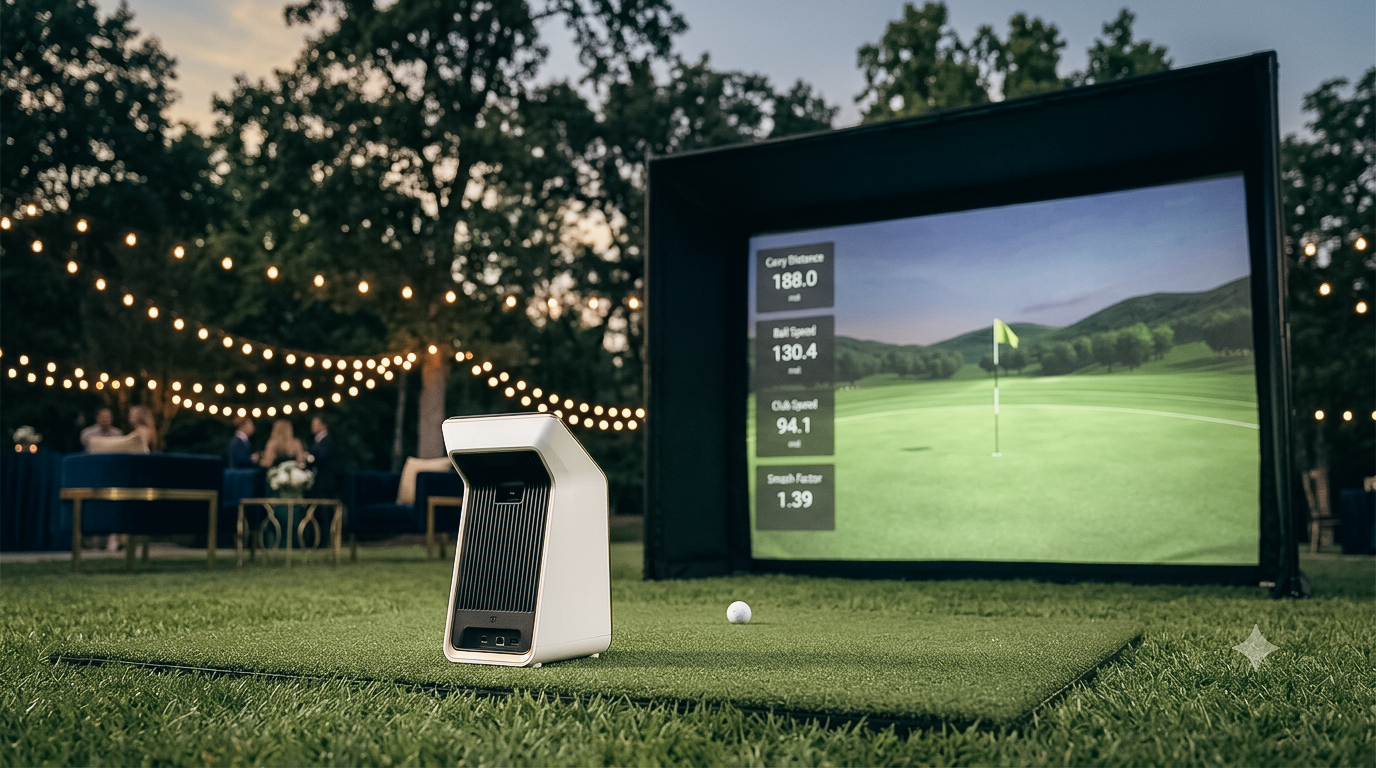
So I asked a different question: what's the smallest, lowest-risk version of this that still creates something real? The answer was a mobile setup — a single simulator I can bring to events myself, for a small fraction of the cost of one bay in a building. It fits around my schedule instead of demanding I quit my job to run it, and if it doesn't work, the downside is a lot smaller than a signed lease.
I'll be straight about the trade-off: a physical location would bring in more revenue, faster, if I could afford to open one today. Mobile is slower. But it's a way to prove real demand, build a track record, and put real capital behind the idea myself — instead of asking someone else to take all the risk on a business that doesn't exist yet.
None of this means I'm ruling out going straight to a real location if the right partner shows up. If someone wants to bring the capital to do this right — building, bays, and all — from day one, that's a conversation I'd take seriously in a heartbeat. Mobile is the plan I can run entirely on my own, starting now. It's not the only plan, just the one that doesn't depend on anyone else showing up first.
Starting mobile means I get to:
- Prove there's real demand before betting everything on a lease
- Actually meet and golf with the people this is for
- Learn what people want out of an indoor golf club, instead of guessing at it
- Build toward the capital and track record a permanent location deserves
This isn't a fallback plan. It's chapter one.
The honest question underneath all of this
If the technology and the idea are what make this different, what's stopping someone else from just building it themselves? I think the honest answer is me. I'm the one bringing the vision and the tech background to this, and I don't think that means much if I'm not also willing to put my own time and money on the line first. Starting mobile is how I do that.
That said, I'm not trying to do this alone by choice — just by necessity, for now. If this is something you'd want to help build, whether as an investor or in some other way, I'd genuinely like to hear from you. Reach out about backing this early.
What's next
Fairway Mobile isn't live yet. Right now I'm gathering interest and doing real market research through it — talking to golfers, testing pricing, making sure the demand is actually there — before I put money into equipment and start booking real events. That's the honest state of things, and I'd rather say so plainly than let a polished page imply more progress than exists.
Where the eventual permanent club ends up is still an open question too, and some of the properties I'd love to land are tied up in longer-term plans that won't resolve for a while yet — so I'd rather build real momentum with the mobile side than sit around waiting on them.
I'll keep posting here as it moves: what I'm learning, what changes, and eventually, where this all ends up.